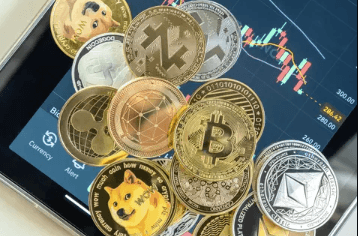
Altcoins Explained offers a concise map of cryptocurrencies beyond Bitcoin, focusing on design choices, use cases, and governance. The overview emphasizes disciplined evaluation: credible development activity, on-chain metrics, and transparent tokenomics. It remains skeptical of hype and cautious about risk, urging systematic comparison rather than religiou enthusiasm. For newcomers, the terrain appears varied and complex, with potential rewards and pitfalls. The next section promises concrete distinctions and frameworks to guide prudent exploration.
What Are Altcoins and Why They Exist
Altcoins, or alternative cryptocurrencies beyond Bitcoin, arise from the desire to address perceived limitations of a single-coin model, such as faster transaction times, lower costs, or novel features like smart contracts.
The market reflects divergent experiments, governance debates, and technical trade-offs.
Altcoins purpose centers on utility and risk diversification; altcoin origins trace back to early forks, evolving networks, and competitive experimentation within decentralized systems.
How Altcoins Differ From Bitcoin by Design
Altcoins differ from Bitcoin by design in the specific goals, consensus mechanisms, and feature sets they implement, rather than simply by being additional currencies. They pursue alternative architectures, such as proof-of-stake variants or customized scripting, with varied security assumptions. This analysis remains data-driven and skeptical, focusing on purely speculative, no utility focus, while avoiding hype and unfounded promises about freedom-enhancing capabilities.
Common Types of Altcoins and Their Use Cases
Different types of altcoins serve distinct use cases, often reflecting targeted design goals rather than broad-based value propositions. This survey catalogs DeFi tokens, governance coins, interoperability platforms, privacy focused coins, stablecoins, gaming tokens, incentive layers, oracles and data feeds, scalable layer 2 tokens, asset backed tokens, security tokens, social tokens, cross chain bridges, carbon credits tokens, utility tokens, yield farming tokens, NFT backed tokens.
How to Evaluate Altcoins and Spot Scams
Evaluating altcoins requires a disciplined, evidence-based approach that separates verifiable fundamentals from hype. The method emphasizes risk assessment, transparent tokenomics, on-chain metrics, and credible development activity over marketing buzz.
Spotting scams hinges on red flags: unrealistic promises, centralized control, poor governance, and opaque funding.
Investment psychology matters: maintain discipline, verify claims, and resist fear-driven decisions to preserve freedom and capital.
See also: The Future of Intelligent Systems
Frequently Asked Questions
How Do Altcoins Impact Everyday Crypto Purchases and Payments?
Altcoins impact everyday crypto purchases by offering diverse settlement speeds and costs; however, feasibility hinges on ease of merchant adoption, user wallet integration, and robust merchant APIs, while skepticism remains about stability, liquidity, and peer to peer tipping viability.
Which Altcoins Have the Strongest Developer Communities?
Several altcoins exhibit the strongest developer communities, notably Ethereum and Cosmos, complemented by robust, active governance. A striking statistic shows GitHub activity surpassing 2,000 weekly commits in peak weeks, underscoring disciplined, data-driven, skeptical progression.
Can Altcoins Outperform Bitcoin in Bull Markets?
The outlook for altcoins suggests limited likelihood of outperforming bitcoin in bull markets; market catalysts vary, but data-driven analysis shows inconsistent alpha, and skeptics note higher risk-adjusted volatility compared to leading assets. Freedom-minded observers anticipate selective upside, not supremacy.
What Are Hidden Risks of Holding Multiple Altcoins?
Like a fragile inventory, holding multiple altcoins presents hidden risks and diversification tradeoffs; the data show concentration risk, liquidity gaps, overfitting to hype, and regulatory uncertainty, demanding skeptical scrutiny for investors seeking freedom and disciplined risk controls.
How Do Regulatory Changes Affect Altcoin Liquidity?
Regulatory changes reduce or reallocate regulatory liquidity for altcoins, as exchanges adjust listings and capital requirements constrain trading. This creates uncertain price discovery, while altcoin regulation signals heavier oversight, potentially chilling innovation and fueling selective liquidity based on compliance.
Conclusion
In summary, altcoins represent a wide spectrum of design choices and use cases, not a uniform market signal. A data-driven assessment—development activity, on-chain metrics, and transparent tokenomics—dispassionately informs risk and return expectations. Skepticism remains warranted where disclosures are opaque or hype outpaces verifiable progress. While some projects solve concrete problems, others reflect speculative momentum. Investors should diversify prudently and avoid overreliance on narratives, because promising innovations often unfold only after sustained, verifiable execution—a marathon, not a sprint.